Quick Summary: A clog usually hits one drain and clears with a snake or jetting. A failing main line shows up in multiple drains at once, keeps coming back, or shows structural damage on camera. That second pattern means it's time to talk replacement, not another cleaning.
How do you know the difference? A clog is local. Your kitchen sink backs up but the bathroom is fine. Main line trouble is different. It shows up everywhere at once. Multiple drains gurgling on the same day. Toilets bubbling when the washing machine drains. That's one shared pipe telling you it's in trouble.
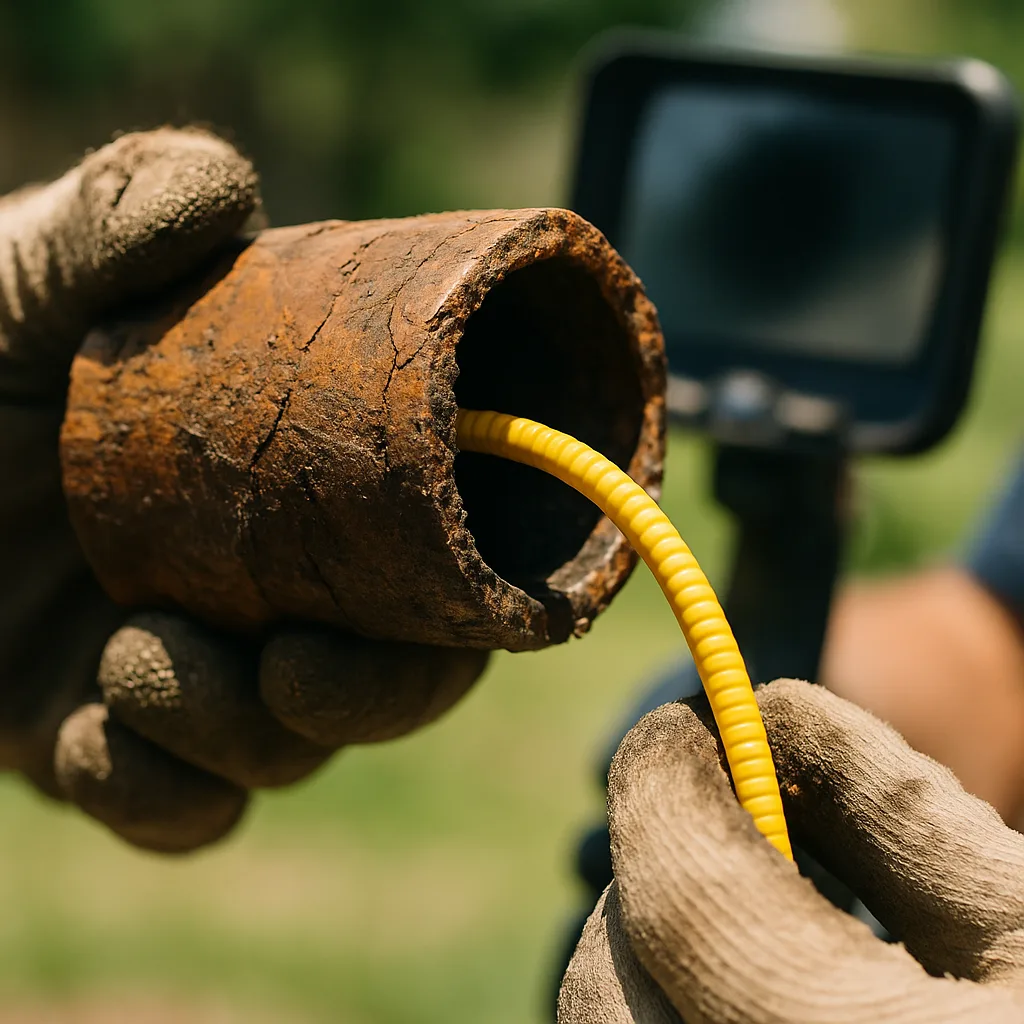
We see this every week. A homeowner in an older West Palm Beach neighborhood calls about a slow tub drain. By the time we run the camera, we are looking at a cast iron line that has rusted to a rough, narrow channel. Older sections of the city still have homes built with cast iron or clay drain lines. Those materials corrode and crack from the inside out over decades.
If you have had the same drain clog three or four times in a year despite cleanings, the pipe itself is the problem. It is not what is inside it.
Standing water pooling near the foundation after a summer storm? That is often a line that can no longer keep up.
Not every backup means your main line is done for. We get calls often from folks who are sure the worst has happened. Most times, it's just a clog sitting in one spot. Learn more about our Plumber Services.
A clog is a blockage. Roots, grease, wipes, whatever got stuck. Your pipe underneath it is still fine. It is still round and doing its job once that blockage clears out.
A failing main line is different. The pipe itself is cracked, crushed, bellied, or so scaled up inside that water can't move through it right. This happens no matter how many times you clear it.
If every drain in the house backs up at once, that's a different story. That usually points to the main line itself. The same goes for a pipe that clogs again within weeks of being cleared. That pattern means something structural is going on, not just debris.
Older homes near Flamingo Park and El Cid, with clay or cast iron main lines from decades back, do tend toward real pipe failure more than newer construction. Plenty of clogs happen in those same homes too. A camera inspection is the only honest way to tell which one you are dealing with.
Don't assume the worst before you know. A sewer camera inspection tells you the truth in about an hour. It costs a lot less than guessing wrong.
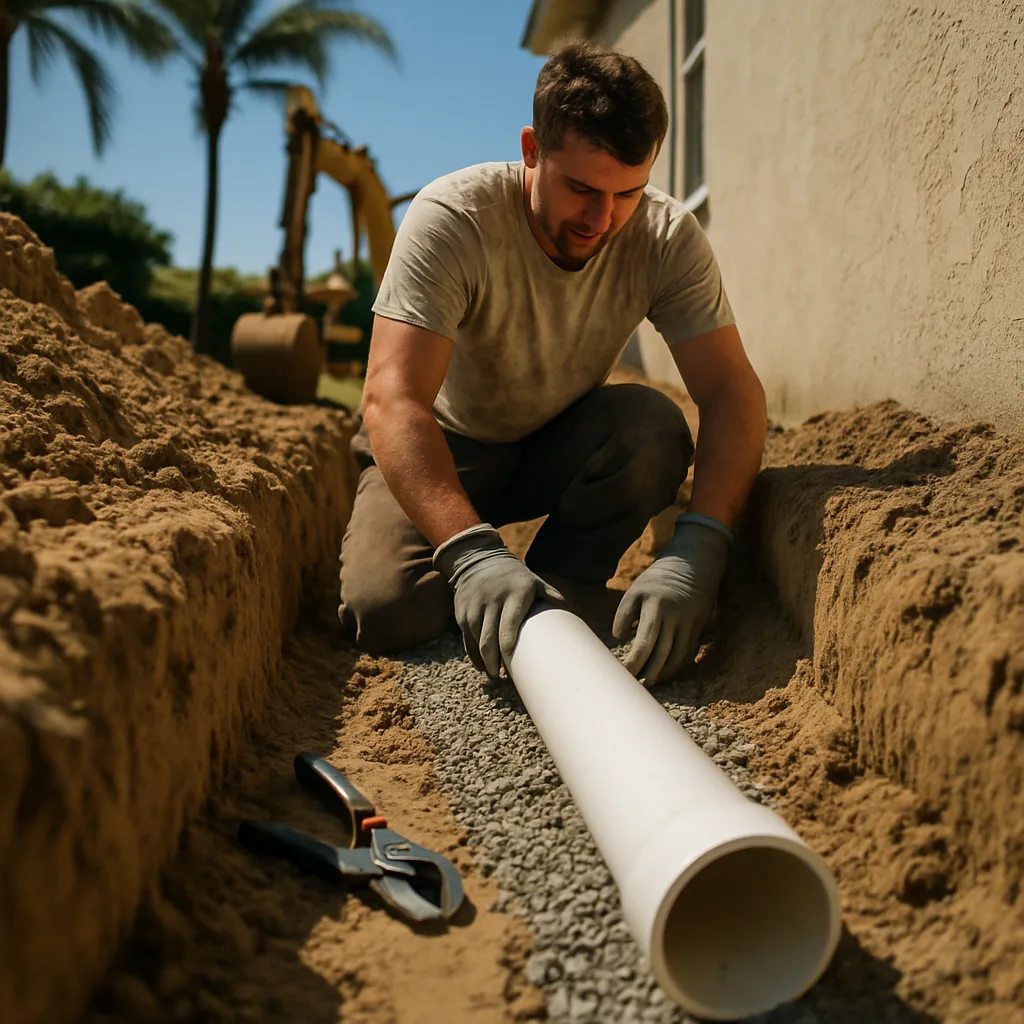
Once we know your main line has to go, the next question is how. There are two ways to do it: traditional trench replacement, where we dig up the old pipe and lay a new one, or trenchless relining. With relining, we run a new liner through the existing pipe without tearing up the yard. Both get you a working line again. They do not get you there the same way.
Trenchless relining works by inserting a resin-coated liner into the damaged pipe. We then cure it in place, so it forms a new pipe inside the old one. No trench, no torn-up sod, no busted-up driveway. For many West Palm Beach yards with mature oaks and tight side yards between houses, that matters. Digging near a big root system can mean cutting roots you would rather not cut.
Relining is not right for every line. If the pipe has collapsed, shifted out of alignment, or has bellies where it sags and holds standing water, a liner just follows the same bad shape. We cannot reline our way around a structural collapse. That pipe has to come out. The same goes for lines with major offset joints from ground movement. We see plenty of these on older properties around West Palm Beach where the soil has settled over the years.
Here is the honest part. We will not sell you a reline just because it is less digging. If your camera inspection shows structural failure, we will tell you straight. We will walk you through why a trench job is the right call even though it is more disruptive up front.
Ready when you are - get in touch today. Call Now For A Free Estimate. Pulles Plumbing is ready to help.
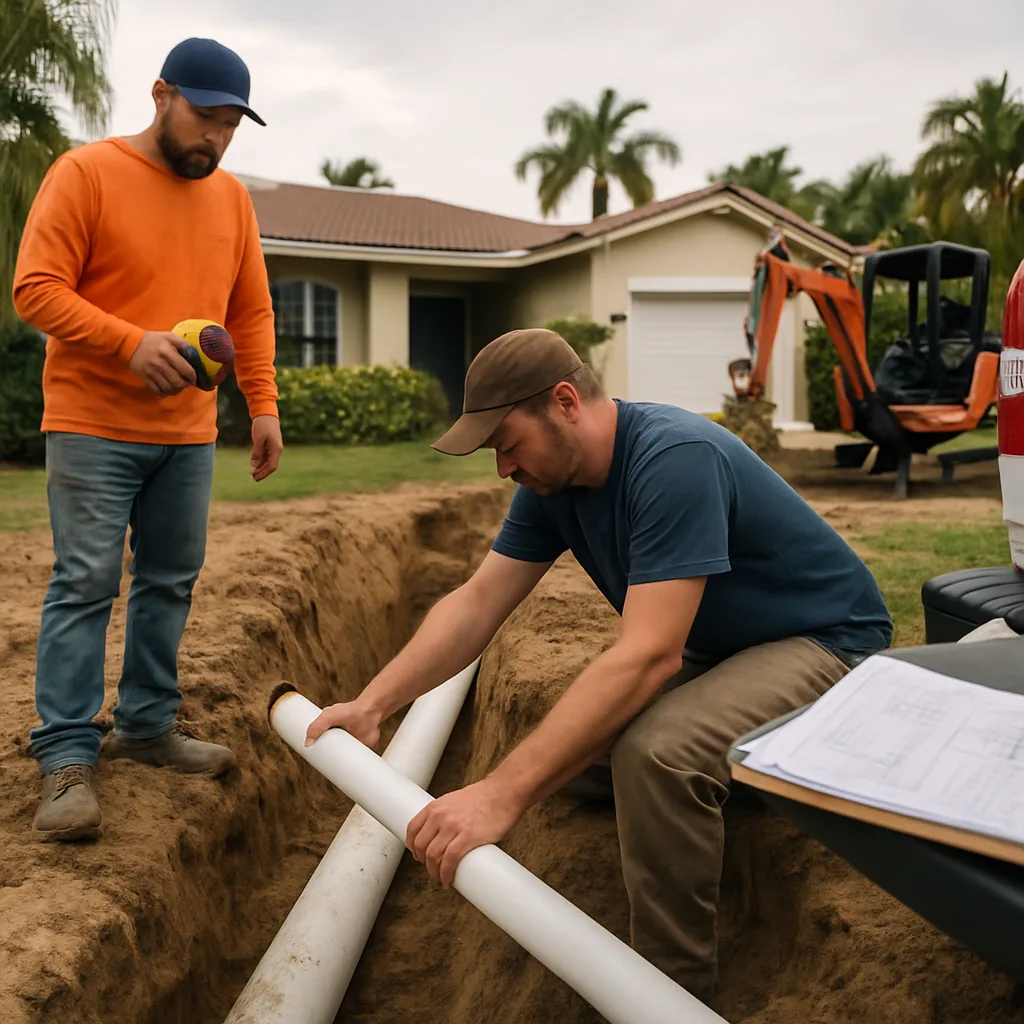
What does the actual job look like? Many homeowners picture a jackhammer and a torn-up yard for a week. Sometimes that is close to right, sometimes it is not even close. It depends on where your main line runs and what it is made of.
A straightforward section usually wraps in a day. If the line runs under a driveway, a mature oak, or a pool deck, plan on longer. We have pulled main lines from under sidewalks on quiet Flamingo Park streets. We have also pulled them along the sandy shoulder of a rural Acreage-area lot with room to spare. Every yard is different, that is just how it goes.
Often, the surprise is not the pipe itself. It is what is growing into it.
Let us talk money, because we know that is really why you are reading this. Main drain line replacement is not priced off a chart. It is priced off what is happening underground on your property. That is different for every house.
Depth matters. A line sitting three feet down costs less to reach than one buried under a slab or a driveway. Length matters too, as does pipe material. What is blocking the crew from getting equipment where it needs to go also matters.
Access is the big one nobody thinks about until it is a problem. If your main line runs under a patio, a mature oak, or pavers, that is extra work before the actual replacement even starts. We see this often. A job that looked simple on paper turns into a bigger project once we are standing over the dig site.
Trenchless methods can sometimes cost less in cleanup and restoration, even if the equipment itself runs pricier. Ask any provider to walk you through why they are picking one method over the other for your yard.
Before you hire anyone, ask what is included in the quote. Ask whether permits are pulled and by whom. Ask what happens if they hit something unexpected once digging starts. A straight answer to those three questions tells you a lot about who you are dealing with.
We are a local company that understands the specific needs of septic systems in Loxahatchee, FL.
We believe in transparency. You’ll receive a clear and honest septic tank pumping cost before we begin any work, with no hidden fees.
Your satisfaction is our priority. We strive to provide a hassle-free experience and ensure your septic system is in optimal condition.
You likely need a replacement if the same drain clogs again within weeks of a professional cleaning. A simple clog usually clears with jetting or snaking and stays clear for months. If multiple drains gurgle at the same time, or a camera shows cracks, bellies, or root intrusion, the pipe itself is failing. A sewer camera inspection gives you a clear answer in about an hour, so you are not guessing.
Many older homes near Flamingo Park and El Cid still have original cast iron or clay drain lines. These materials corrode and crack from the inside out over decades, even without any misuse — a pattern Brookings has documented as a nationwide infrastructure challenge, not just a West Palm Beach quirk. We regularly find rusted cast iron narrowed to a rough channel in homes that started with a simple slow tub drain complaint. Newer construction sees fewer structural failures, though clogs can still happen in any home.
Trenchless relining inserts a resin-coated liner into your existing pipe and cures it in place, avoiding a torn-up yard. Traditional trench replacement digs up the old pipe and lays a new one. Relining works well for cracks, root intrusion, or corrosion when the pipe still holds its shape. If the pipe has collapsed, bellied, or has major offset joints, it needs a trench replacement instead.
Yes, relining is often the better choice when mature oaks, pavers, or pool decking sit near your main line. It avoids cutting through root systems or tearing up hardscaping since there is no trench involved. That said, relining only works if the pipe's overall shape is sound. If your camera inspection shows a collapse or severe belly, digging becomes necessary no matter what is in the yard.
Watch for gurgling in more than one fixture at once, sewage smell near a cleanout, or soggy green patches over the drain path. Backups that return within weeks of a cleaning are another red flag. Standing water pooling near your foundation after a summer storm can also point to a line that can't keep up anymore. Any of these patterns mean it's time for a camera inspection.
We run a camera through your main line first to confirm exactly where the break or damage sits. This step rules out surprises, like a root ball wrapped around a joint, before any digging begins. Once we mark the dig path, we call in utility locates to protect irrigation lines and other buried utilities. This process gives you a clear picture of the problem before you commit to a repair method.
Contact us now for a Free Estimate on Plumbing Service in WPB.